


[会议预告] 教育治理体系与治理能力现代化国际论坛 The Forum of Educational Governance in the 21st Century: Theories, Methods, and Practices
教育管理学院
2021-10-28
The Forum of Educational Governance in the 21st Century: Theories, Methods, and Practices
教育治理体系与治理能力现代化国际论坛
Host :
Beijing Normal University College of Educational Administration.
Sponsor:
Huiyan International College, Faculty of Education,Beijing Normal University.
1 NOV-3 NOV
Beijing China
Forum Introduction
We live in a new era of unprecedented social change with rapid development on information technology, artificial intelligence, and other high-tech products bringing us different socio-economic-cultural challenges. To successfully respond to these challenges, we need to improve the overall quality of education for social development by upgrading our educational governance system and governance capability. Thus, the Forum invites national and international scholars to share and exchange ideas about educational governance theories, methods, and practices to advance our understanding of the topic.
Theme:
The Forum of Educational Governance in the 21st Century: Theories, Methods, and Practices
Sub-Theme:
1) educational governance and social changes
2) research methods for educational governance
3) educational governance in the digital era
4) educational governance and equality
5) educational governance and quality of education
Schedule
Date |
Time (Beijing Time) |
Speaker |
Topics |
1-NOV |
8:50-9:00AM |
Prof. Kai Yu College of Educational Administration,Beijing Normal University |
Opening ceremony |
9:00-10:00AM |
Dr.Philip Wing Keung Chan Monash University |
Network Governance and Mohe: Asia as Method in Education Studies |
|
10:00-11:00AM |
Prof. Michael A. Peters Beijing Normal University |
The Politics of Devolution and Choice in Educational Governance: The Reform of ‘Tomorrow’s Schools’ in New Zealand |
|
5:00-6:00PM |
Dr. Kwok Kuen Tsang College of Educational Administration,Beijing Normal University |
Network Government not Network Governance in China |
|
6:00-7:00PM |
Prof. Andrew Wilkins Goldsmiths, University of London |
Sense making and coping with complexity: Using theory to reimagine governance |
|
2-Nov |
9:00-10:00AM |
Prof.Gerard A.Postiglione The University of Hong Kong |
The Governance of Higher Education in Asia: Toward 2030
|
10:00-11:00AM |
Prof. Paul Newton The Department of Educational Administration at the University of Saskatchewan. |
Examining multi-levelled educational governance in Canada: The link between governance and educational quality
|
|
11:00-12:00AM |
Prof. Rui Yang University of Hong Kong |
Teasing out Facts from Fiction: Some Preliminary Reflections on Higher Education Governance |
|
7:00-8:00PM |
Dr. Benjamin Green Beijing Normal University |
The Pragmatic Instrumental Governance of Chinese Higher Education: Rational Chaos, Collective-Individualism, and Institutional Change |
|
8:00-9:00PM |
Prof. Aaron M. Kuntz Florida International University |
Governing Inquiry: The Use of Methodology to Create Rational and Ordered Education |
|
3-Nov |
9:00-10:00AM |
Prof. Tim Hallett Indiana University
|
Learning to think like an economist without becoming one:Professional education and ambivalent reproduction in a Masters of Public Affairs program |
10:00-11:00AM |
Prof. Zhiyong Zhu, College of Educational Administration,Beijing Normal University Ms. Wenqi Zhang University of Washington Seattle College of Education. |
Accountable Assessment, the Rite of Passage, and Academic Ritual:The Meanings of Doctoral Dissertation Defense Institution from the Perspective of Inhabited Institutionalism |
|
5:00-6:00PM |
Dr.Haiyan Qian Asia Pacific Centre of Leadership and Change, Education University of Hong Kong |
System Leadership for Promoting Collective Responsibility in China: Boundary Spanners and Boundary Practice
|
|
6:00-7:00PM |
Dr. Shuangmiao Han College of Education, Zhejiang University. |
Policy experimentation, education reform and China's experimental governance
|
Meeting platform
Nov 1
Zoom https://us02web.zoom.us/j/86855656818
Meeting ID: 868 556 56818
Password: 505631
Nov 2 & 3
Zoom https://us02web.zoom.us/j/87300248517
Meeting ID: 873 002 48517
Password: 549442
Language:
English
speaker
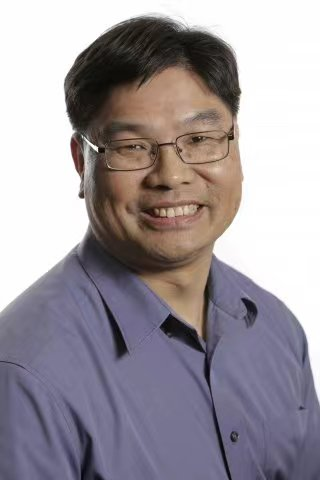
Dr. Philip Wing Keung Chan is a Senior Lecturer in the Faculty of Education, Monash University. His research work is focused on network governance, policy network, leadership, and public education reform, especially in the context of Chinese enterprise schools. He developed the concept of ‘Asia as method’, which offers multiple frames of reference in education research, including inter-referencing amongst countries in Asia. This is new territory in academic research. It is of particular benefit to students from Asia, for whom only a western theoretical lens has previously been available to look at education issues in their home countries.
Dr. Chan published a number of books include Asia Pacific Education: Diversity, Challenges and Changes (Monash University Publishing, 2012), Equality in Education: Fairness and Inclusion (Senses Publishers, 2014), Asia as Method in Education Studies: A Defiant Imagination (Routledge, 2015), Asia Pacific Education: Leadership, Governance and Administration (Information Age Publishing, 2019), Public Education Reform and Network Governance: Lessons from China's State-owned Enterprise Schools (Routledge, 2019), and School Governance in Global Contexts: Trends, Challenges and Practices (Routledge, 2021).
Report Abstract:
Network Governance and Mohe: Asia as Method in Education Studies
Abstract:Network governance is a major theory that examines interactions between groups that make up networks involved in policy making. There is a substantial body of work on how governance has affected the way central government contribute to the policy process. Rod Rhodes possibly offers the most prominent and persuasive account of the governance concept. He employs governance to explore the institutions, actors and processes of change within the core executive in British. He defines network governance as “self-organizing, inter-organizational networks characterized by interdependence, resource-exchange, rules of the game and significant autonomy from the state”. In light of the idea of ‘Asia as method’, this presentation discusses how the localized Western term of network governance, Mohe (磨合), is more effective at formulating and implementing Chinese education policy because the ‘significant autonomy from the state’ may not be fitted in China as the role of the Chinese central government is still dominant in the policy making. It is still highly resourced and has a range of powers with which to retain influence over public sector agencies.
This presentation utilises a case study to show that policy problems have been overcome by the actors’ participation when the railway state-owned enterprise school was removed from the Ministry of Railways to the Ministry of Education. The main actors involved in this education reform are the local Education Bureau, the General Education Department of Railway Bureau, the principal, current and retired teachers of railway state-owned enterprise schools. These actors have their primary goals, perceptions of the issues at hand, and the strategies they employed when they engaged in different deadlocked problems. Mohe is generally useful and fruitful for understanding the policy process in China. It has the potential to provide a framework to analyse the policy making process in the West, especially for countries where state power is still in place and cannot be excluded.
speaker
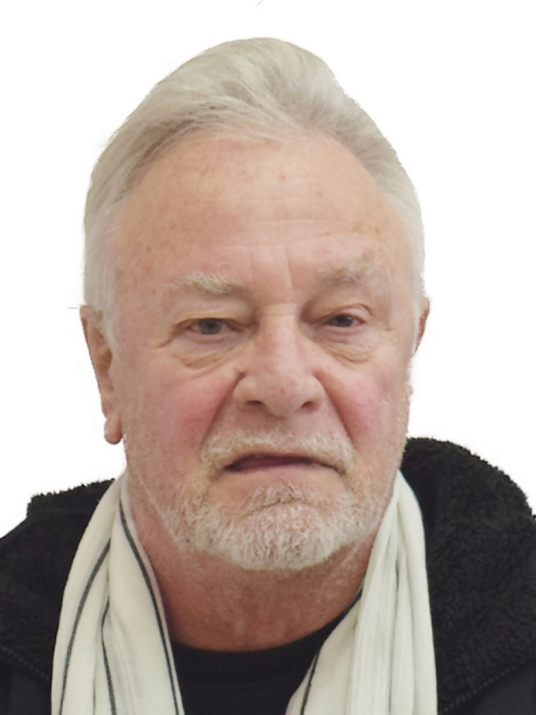
Michael A. Peters is Distinguished Professor of Education at Beijing Normal University, Emeritus Professor at the University of Illinois (Urbana-Champaign), and Honorary Senior Research Fellow at the University of Auckland. He is the Editor-in-Chief of the journals, Education Philosophy and Theory and The Beijing International Review of Education (with Zhu Xudong). He writes on topics in education and philosophy and has published books on Wittgenstein and Foucault, among others. His most recent publications include Pandemic Education and Viral Politics (2020), The Far-Right, Education and Violence (2020), both with Tina Besley, and Wittgenstein, Education and the Problem of Rationality (2021). He is a lifetime member of the NZ Academy of Humanities and was made an Fellow of the Royal Society of New Zealand in 2008. He is an Honorary Fellow of the Society for Research into Higher Education and he was awarded honorary doctorates by State University of New York (SUNY) in 2012 and the University of Aalborg in 2015. https://michaeladrianpeters.com/
Report Abstract:
The Politics of Devolution and Choice in Educational Governance: The Reform of ‘Tomorrow’s Schools’ in New Zealand
Early provision for state to support the existing network of mission schools with public funds in the Education Ordinance 1847 and the Education Act 1877 introduced compulsory, free and secular state schooling at primary level, for children 7-13. Regional education boards played the dominant role in school system and the period 1900-1980 saw an increase in the centralisation of the school system, with significant control transferred to schools and local communities from 1989 under “Tomorrow’s Schools”. The Taskforce to Review Education Administration (1987) identified five major issues in the education system: 1. Over-centralisation of decision-making; 2. Complexity; 3. Lack of information and choice; 4. Lack of effective management practices; 5. Feeling of powerlessness among parents, communities and practitioners. These recommendations were made against the backdrop of a neoliberal government strongly influence by public choice theory in reorganising the public sector. The Education Act 1989 introduced self-managing schools with representative boards of trustee (BoT) and three new central agencies: the Education Review Office to monitor schools; the New Zealand Qualifications Authority to oversee student assessment; and a small Ministry to provide policy advice. Further decentralisation of school governance took place during 1990–2017. In 2018 a review of Tomorrow’s Schools examined the self-governing model suggesting it was not working consistently well across the sector. This presentation reviews the shift from highly centralised to decentralised self-managing schools to examine the politics of devolution and choice in educational governance.
speaker

Dr. Kwok Kuen Tsang is the Assistant Professor and Associate Dean of the College of Education Administration, Beijing Normal University. His research interests include teachers’ work and emotions, education reform, educational governance, and school administration and management. Dr. Tsang is the author of Teachers’ Work and Emotions: A Sociological Analysis published by Routledge. His research work is published by several SSCI-indexed journals, like British Journal of Sociology of Education, British Journal of Educational Studies, Discourse: Studies in the Cultural Politics of Education, Educational Philosophy and Theory, Educational Studies, Asia Pacific Education Review, and Asia Pacific Journal of Education. He serves now as the Associate Editor of Beijing International Review of Education.
Report Abstract:
Network Government not Network Goverance in China
Previous studies suggest that China adopts network governance – steering societies through heterarchical and democratic collaboration with nonstate actors to formulate and implement policies in and through policy networks. However, the present study argues that network governance may not be China’s mode of governance. Based on a case study of an overseas NGO in China, the study identifies that the mode of governance used by the PRC government should be better conceptualized as network government, which is the application of the network approach of governance to emphasize and strengthen party-state leadership and control over NGOs in the policy process. In network government, the findings suggest that political dependence, political trust, and grinding are the elements constituting the patterns of the relationship and interaction between NGOs and the PRC government.
speaker
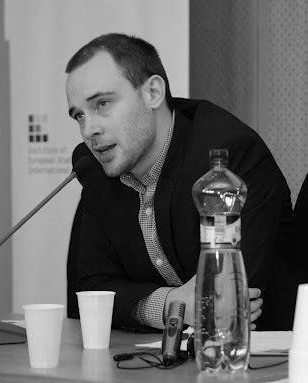
Andrew Wilkins is Reader in Education Policy and Co-director of Research in the Department of Educational Studies at Goldsmiths, University of London. He is Associate Regional Editor (Europe) for Journal of Education Policy and serves on the editorial board for British Journal of Sociology of Education, The Australian Educational Researcher and Journal of Applied


师大教育学部
教育学部视频号

培训学院

惠妍国际学院

学而微语
英东洞
